


Casement Window Replacement
YOUR TRUSTED SOURCE FOR ENERGY EFFICIENT WINDOWS

One STOP PREMIUM WINDOW INSTALLATION SERVICES
Quality Casement Windows
Professional Casement Window Replacement for Chicago Suburb Homeowners
If your windows are drafty, difficult to operate, or causing high energy bills, it may be time for casement window replacement in the Chicago suburbs. At Window Concepts, we install high-quality, energy-efficient casement windows designed to improve your home’s comfort, ventilation, and long-term value.
With decades of experience and a reputation for reliable service, we help homeowners throughout the Chicago suburbs choose the right window solutions—backed by expert installation and strong warranties.


Windows You’ll Love — Guaranteed


5.0 Star Client Approval Rating


Crank-Out Casement Windows
Casement windows utilize an easy-to-use crank design, making them an ideal choice for narrow or tall openings where maximizing natural light and ventilation is key. Discover how custom casement window replacements enhance airflow and energy efficiency for Streamwood homes.
What Is a Casement Window?
A casement window is hinged on the side and opens outward using a crank handle. Unlike sliding or double-hung windows, casement windows swing open like a door, allowing for full top-to-bottom ventilation.
Casement windows are a popular choice for homeowners who want unobstructed views, maximum airflow, and a tight seal when closed—making them especially energy efficient for homes in the Chicago suburbs.

Why Homeowners CHOOSE CASEMENT Windows…


Benefits of Installing Casement Windows for Your Chicago Home

Superior Ventilation: Hinged on the side and open outward to catch the breeze from any direction.
Energy Efficient: A tight seal along all edges keeps your home comfortable and helps lower utility costs.
Unobstructed Views: Slim frames and wide openings provide a clean, modern aesthetic and maximum natural light.
Easy Operation: Smooth crank handles make them simple to open, even in hard-to-reach places.
Secure Design: Multi-point locking systems offer added safety and peace of mind.

Signs You Need to Replace Your Casement Windows
You may need replacement windows if you notice:
- Drafts or poor insulation
- Increasing heating and cooling costs
- Crank mechanisms that are hard to use or broken
- Windows that won’t seal properly
- Condensation between glass panes
- Visible damage, rot, or outdated appearance
Upgrading your windows can improve comfort, efficiency, and curb appeal.
Casement vs. Double-Hung Windows
Not sure which option is right for your home? Here’s a comparison:
Feature | Casement Windows | Double-Hung Windows |
Operation | Crank-open outward | Slide vertically |
Ventilation | Full opening for maximum airflow | Partial airflow control |
Energy Efficiency | Tighter seal when closed | Good, but less airtight |
Ease of Use | Crank operation, ideal for hard-to-reach spots | Manual sliding |
Appearance | Modern, unobstructed view | Classic look with divided sashes |
For many homeowners, casement windows offer superior airflow, energy efficiency, and a more modern appearance.
Need New Casement Windows?
Why Choose Window Concepts?
For casement window replacement in the Chicago suburbs, Window Concepts focuses on expert installation, durable products, and long-term performance.
- Decades of industry experience – Established in 2003 with a strong track record
- Proven installation process – Designed to improve efficiency and eliminate drafts. View our projects.
- Strong local reputation – Trusted by homeowners throughout the Chicago suburbs
- Transparent pricing – Clear estimates with financing options available
- Clean, professional work sites – We protect your home and clean up thoroughly
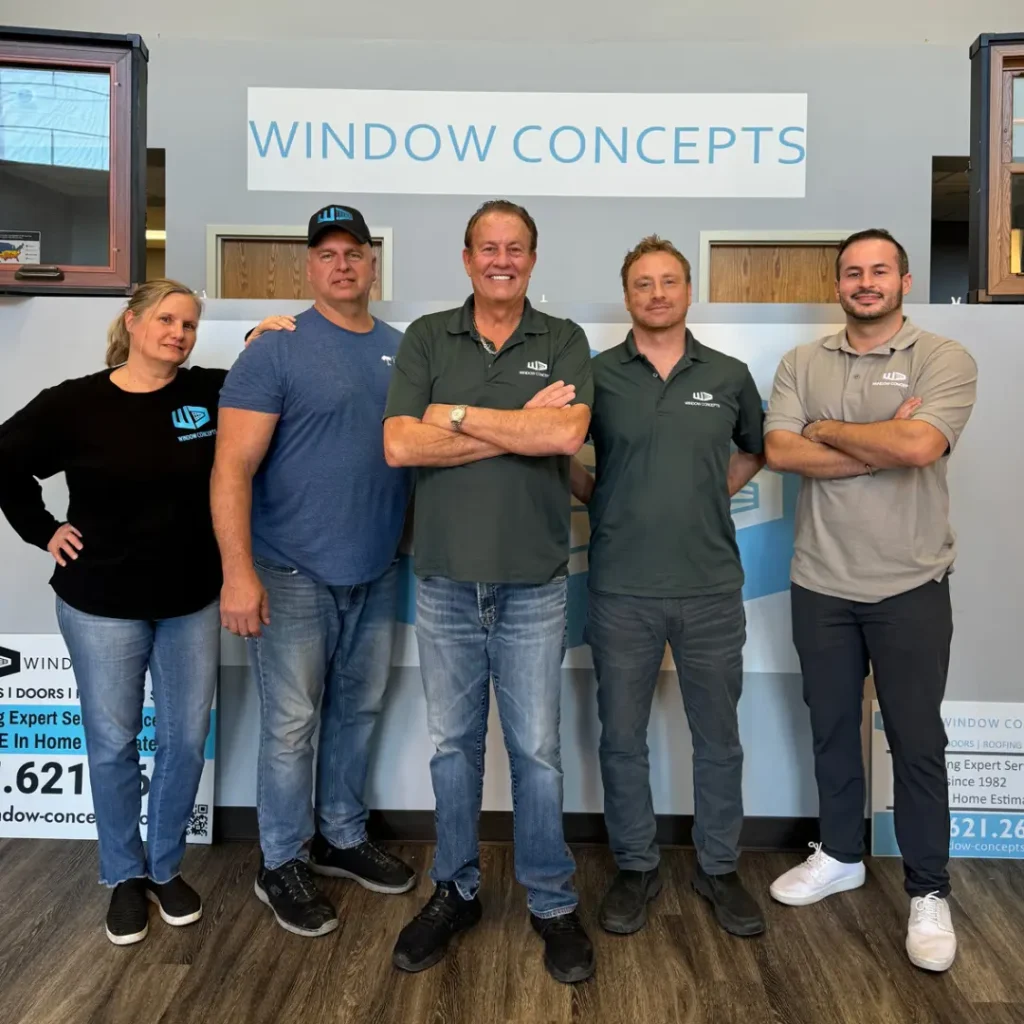
Casement Window Replacement FAQs
Are casement windows energy efficient for Chicago homes?
Yes. Their tight seal and modern glass options make them one of the most energy-efficient window styles available.
Where are casement windows typically used?
They’re ideal for areas needing ventilation, such as kitchens, bathrooms, and hard-to-reach spaces.
How much does casement window replacement cost in Chicago suburbs?
Costs vary depending on your home and window choices. Contact us for a free estimate.
Are casement windows secure?
Yes. Multi-point locking systems provide excellent security.
Can I replace just a few windows?
Yes. We offer fully customized windows designed to fit your home’s style and performance needs.
How long does installation take?
Most projects can be completed in a single day, depending on the scope.
How much does it cost to replace casement windows in Chicago?
The cost varies depending on several factors, including the number and size of windows, frame material (vinyl, wood, or fiberglass), glass packages and energy-efficient upgrades, and installation complexity.
What factors affect the total cost?
Key factors include:
- Number and size of windows
- Frame material
- Energy-efficient glass options
- Installation requirements
How can I get an accurate estimate?
The best way is to schedule a free in-home consultation, where a professional will assess your needs and provide a detailed quote.
How do outward-opening casement windows perform against heavy Chicago wind gusts?
When closed and latched, outward-opening casements are among the most wind-resistant operable windows for Chicago homes, because gust pressure tends to press the sash into its compression weatherstripping. When left open, the sash acts like a sail and strains the hinges and crank operator. The exact unit still needs a Performance Grade that meets its opening’s design pressure.
Performance when closed
Cranking a casement shut pulls the sash against a continuous gasket on all four sides. Unlike the sliding seals on a double-hung, this compression seal stays tight in gusty winter weather, as long as the frame is rigid, the weatherstripping is intact, and the unit is installed square. Performance also depends on:
- Multi-point locks, which hold the sash evenly against the gasket
- Hinge, operator, and fastener capacity
- Window size and proportions, within the manufacturer’s maximum approved dimensions
- Glass thickness and insulating-glass configuration
Chicago wind design
The Greater Chicagoland’s building code sets a basic design wind speed of 107 mph (3-second gust) for Risk Category II buildings, which includes most homes. That’s a design input, not a rating every window must carry. The actual pressure on a specific window depends on building height, corner or roof-edge location, terrain exposure, and shielding from nearby structures. Openings that need closer attention include:
- Lakefront or open-terrain homes with little wind shielding
- Upper-story installations
- Large or tall casement units
- Openings near building corners or roof edges
What rating to ask for
Request the NAFS label (AAMA/WDMA/CSA 101/I.S.2/A440) for the exact product line and size. A designation like LC-PG40 or AW-PG50 shows the performance class and pressure grade, and it must meet or exceed the design pressure for that opening. NAFS structural testing is performed at 150% of design pressure, and ratings apply only to the tested size, so an oversized window can’t borrow a smaller unit’s rating.
The real risk: open windows
Gusts on an open sash put heavy leverage on the operator arm, hinges, and frame, which can bend hardware or strip crank gears. To prevent damage:
- Close and lock casements before storms or when you leave home
- Open sashes only slightly on windy days if they face the prevailing wind
- Keep cranks, hinges, and locks adjusted and maintained
- Never hang planters, screens, or accessories from an open sash
Installation matters
Wind load travels from the glass through the frame and fasteners into the wall framing. Even a high-rated casement can rack or leak if it’s anchored into deteriorated framing, installed out of square, or bowed by over-foaming. The installation scope should include manufacturer-specified fasteners, continuous shimming, low-expansion perimeter sealing, integrated sill pans and head flashing, and a final operation check.
Can casement windows freeze shut or strip their crank mechanisms during Illinois winters?
Yes, but neither should be routine for a properly installed casement. Ice can bond the sash to its frame when condensation or wind-driven moisture freezes at the weatherstripping, and forcing the crank against that ice is what strips operator gears or bends the arm. If a casement resists opening in winter, stop cranking and let it thaw.
Why casements freeze shut
A closed, locked casement shouldn’t freeze from outdoor weather alone. Repeated freezing means moisture is reaching the sash-to-frame contact points from sources such as:
- Interior condensation running down the glass onto the sill and weatherstripping
- Wind-driven rain or snowmelt entering through a failed exterior joint
- Clogged sill drainage or blocked weep holes
- Cold spots at the frame, glass edge, or an uninsulated bay window head or seat
- Damaged weatherstripping or an out-of-square sash that already rubs
How cranks get stripped
A casement operator uses a worm gear, crank spindle, and linkage arms to push the sash outward. It’s built for normal operation, not for breaking an ice bond, pushing a swollen wood sash, or turning through corrosion. Common symptoms point to different causes:
- Crank won’t turn at all: Ice at the sash or seized gears. Stop and let it thaw.
- Crank spins but the sash doesn’t move: A stripped gear, loose handle set screw, or detached arm. Stop using it and schedule a repair.
- Crank is unusually stiff: Debris, dried lubricant, corrosion, or early icing. Clean and lubricate once dry.
- Sash opens but won’t lock: Debris, damaged weatherstripping, or a warped sash. Don’t force the lock.
Safely thawing a frozen casement
- Unlock the sash only if the lock releases freely.
- Clear loose snow and ice from the exterior perimeter if it’s safely accessible, without prying on the sash.
- Raise the room temperature and point a fan toward the window to warm it gradually. Avoid open flames, boiling water, or high heat, which can damage seals, glass, and vinyl.
- Once thawed, crank slowly. If there’s still resistance, stop and inspect the hardware.
Operators and handles are usually replaceable on their own, but forcing a frozen window can turn a simple hardware fix into sash or frame damage.
Fall prevention checklist
- Keep winter indoor humidity around 30–35%, and run bath and kitchen exhaust fans.
- Clean the sill, hinges, operator arms, and weep holes.
- Replace torn, brittle, or paint-covered weatherstripping.
- Lubricate hinges and operators sparingly with the manufacturer-approved dry or silicone-based product. Some manufacturers warn against oily lubricants because they collect grime.
- Confirm the sash closes evenly and locks without pushing on it.
- Avoid leaving heavy drapes closed for long periods, which trap cold air against the glass.
When it signals a bigger problem
Recurring ice, water staining, mold, soft trim, persistent condensation, or a sash that rubs usually point to air leakage, failed flashing, blocked drainage, or poor installation. Replacing the crank alone won’t fix those issues.
Do casement windows meet Illinois municipal egress codes for bedrooms and finished basements?
Yes. A casement meets Illinois egress codes when its net clear opening, measured with the sash fully open, provides at least 5.7 sq. ft. (5.0 sq. ft. at grade), 24 inches of height, 20 inches of width, and a sill no higher than 44 inches. Because casements swing clear of the frame, they often meet those minimums in smaller openings than double-hungs.
All four measurements must pass at once
Most Illinois municipalities follow the IRC’s emergency escape and rescue opening (EERO) standard, with local amendments. Each minimum applies at the same time, so meeting the height and width minimums alone isn’t enough. A 20 x 24-inch opening, for example, provides only 3.33 sq. ft. and fails the area requirement.
The measurement is the net clear opening, not the glass size, rough-opening size, or nominal window size. Hinge hardware, sash thickness, frame profile, screens, and the sash’s maximum open position can all reduce it. Before ordering, get manufacturer documentation for the exact model showing:
- Net clear width, height, and area at the fully open position
- Confirmation that the size is an egress-rated configuration
- Operation from inside without a key, tool, or special knowledge
Bedrooms vs. finished basements
- Bedrooms: Each sleeping room needs its own compliant egress opening unless it has a qualifying exterior door. A basement bedroom can’t rely on an egress window elsewhere in the basement.
- Finished basements without bedrooms: Requirements vary by municipality. Many require at least one egress window or exterior door for habitable space, and the building department typically makes the determination during the basement-finishing permit.
Below-grade window wells
A below-grade casement also needs a compliant window well:
- At least 9 sq. ft. of clear floor area, with a minimum 36-inch width and projection
- A permanently attached ladder or steps if the well is deeper than 44 inches
- A ladder placed so it doesn’t block the escape area or the sash swing
- Positive drainage so water doesn’t collect against the opening
Because casements swing outward, plan the hinge side and sash swing so the well, ladder, or cover never blocks the window from opening fully. In Chicago-area winters, drifting snow and ice in the well can also block the sash, so keep wells clear and use covers that open easily from below.
Permits in the Chicago suburbs
Adding an egress window, enlarging an opening, cutting foundation masonry, excavating a well, or finishing a basement should be treated as permit-required work. Municipalities commonly ask for:
- Finished-floor-to-sill height
- Manufacturer’s net clear opening dimensions
- Window well dimensions, depth, drainage, and ladder details
- Casement hinge side and swing path
- Foundation-cut, lintel, and waterproofing details for new or enlarged openings
Confirm your village’s current requirements before purchasing the window.
Get a FREE Quote!
Simply fill out the Inquiry Form and we will get back to you within 24 hours with an Instant Quote!

OR call US At:
FROM QUOTE TO INSTALLATION — WE MAKE GETTING NEW WINDOWS EFFORTLESS
There’s No Easier Way To UPGRADE YOUR WINDOWS With Our Simple 3 Step Process
Step 01
CONTACT US BELOW OR GIVE US A CALL
Together we will learn more about your window needs and schedule a Free consultation.

Step 02
GET A QUOTE & RECEIVE CONTRACT
After receiving the quote and contract our installers will come to your home to take precise measurements.
Step 03
ENJOY YOUR NEW WINDOWS
We will professionaly install your new windows once production is completed.
REAL HOMEOWNERS — REAL RESULTS YOU CAN SEE
See why HOMEOWNERS trust us to upgrade their windows with quality and care
Posted on GoogleTrustindex verifies that the original source of the review is Google. Brian was reasonable with price. Window Concepts sells quality windows. Installed door and 19 windows to.date. 10 more to go and will be a repeat customer. Paul and crew are very professional installers.Posted on GoogleTrustindex verifies that the original source of the review is Google. We had an excellent experience from start to finish. The salesperson was knowledgeable, friendly, and never made us feel pressured. The pricing was fair and competitive, and the entire process was smooth and well organized. The installation crew was professional, courteous, and incredibly hardworking. They arrived on time, took great care of our home, and did an outstanding job installing our new windows. They also cleaned up thoroughly when they were finished. One of the biggest differences we’ve noticed already is how much more comfortable our home feels. The temperature throughout the house is much more consistent, and we’re excited to be much more energy efficient. The new windows have made an immediate impact. We highly recommend this company to anyone looking for beautiful, high-quality windows and a truly professional experience.Posted on GoogleTrustindex verifies that the original source of the review is Google. Window Concepts was great. They did a phenomenal job replacing all of our upstairs windows. We received quotes from many other providers. Some were good but most were awful. Either they were overcharging like crazy, talking about exclusive lifetime warranties (which everyone has) or how we should replace all of our downstairs windows too which were only 5 years old so we could get a better discount… With WC, we got honesty and an affordable price. Brian was great. He came over explained everything and was probably here for half an hour in total. Even complemented our downstairs windows and how they’ll last us 20+ years. He didn’t give us a massive presentation and waste our time. He was just honest and great to work with. He understood that we wanted to have this done before July and he was sure to get that done. The installation was great too. His guys were here early and got the job done before 5. We love our new windows. In the future, if we replace more windows, we’ll be sure to give them my business againPosted on GoogleTrustindex verifies that the original source of the review is Google. Great overall!Posted on GoogleTrustindex verifies that the original source of the review is Google. Great to have new windows. 2 years this fall and they are good to go.Posted on GoogleTrustindex verifies that the original source of the review is Google. Brian and his team are very professional, they placed our order and the Windows came in on time . His installers are top notch very knowledgeable and the install was very smooth and well done . I would highly recommend them to anyone who is interested in having your windows replaced or if you are getting new ones in your home .. Thanks Brian and your crew for a job well done !Posted on GoogleTrustindex verifies that the original source of the review is Google. We had a great experience with Window Concepts. Friendly, great service, expert installation, quality windows and competitive price. Would recommend to anyone!Posted on GoogleTrustindex verifies that the original source of the review is Google. Windows Concepts did a great job installing our sliding glass door & 2 windows in 2022, so we are having them come back for our next round of windows we need installed. I highly recommend Garrett, Brian and Vince.Posted on GoogleTrustindex verifies that the original source of the review is Google. I had 9 windows replaced by Window Concepts. It all went really smooth and I love my new windows! The crew guys were very respectful and put them in quicker than I was expecting. I would highly recommend.Posted on GoogleTrustindex verifies that the original source of the review is Google. Great product! Great professional crew!
LETS TURN YOUR DREAM WINDOWS INTO REALITY

Free Window Consultations
Together let’s discuss your window needs.
Free Custom Quote
Receive a detailed quote tailored to your project.