

Choosing Energy‑Efficient Windows: A Practical Guide to Ratings, Materials, and Real Savings

Upgrading to energy‑efficient windows can lower heating and cooling bills, improve year‑round comfort, and protect furnishings from sun damage. This guide breaks down the ratings and metrics you’ll see on labels—U‑factor, SHGC, Visible Transmittance (VT), and Air Leakage—and explains how glass, frames, coatings, and installation change those numbers. Many homeowners find labels confusing; here you’ll get clear, climate‑specific advice for the Chicago suburbs, side‑by‑side comparisons of double‑ and triple‑pane systems, and practical steps to capture the most savings through proper installation and financing. We’ll show you how to read NFRC and ENERGY STAR ratings, weigh double vs. triple pane tradeoffs, pick frame materials, choose Low‑E and gas‑fill combos, and plan installs that preserve rated performance. Expect short lists, comparison tables, and easy rules‑of‑thumb so you can make confident choices and estimate ROI for your project.
What Are Energy Efficient Window Ratings and Why Do They Matter?
Window ratings tell you how a product manages heat flow, solar gain, visible light, and air leakage—information that predicts comfort and energy costs. The two main systems in the U.S. are NFRC ratings (which list U‑factor, SHGC, VT, and Air Leakage for a specific unit) and ENERGY STAR certification (which means a product meets region‑specific performance thresholds). In cold climates, lower U‑factors reduce heat loss; SHGC should be chosen by orientation to control solar gain. VT and Air Leakage numbers help balance daylight and airtightness. Learning these metrics makes it easier to compare manufacturers and avoid marketing claims that don’t match real performance. The next sections explain U‑factor and SHGC in straightforward homeowner terms so you can read labels with confidence.
What Is U‑Factor and How Does It Affect Your Home’s Insulation?
U‑factor measures how much heat moves through the whole window assembly—the lower the number, the better the insulation and the less heat you lose in winter. It’s reported in Btu/(hr·ft²·°F), and NFRC labels often show both center‑of‑glass and whole‑unit values; whole‑unit U‑factors reflect the real performance because they include frame effects. For Chicago winters, aim for whole‑unit U‑factors around or below 0.30 when replacing single‑pane windows to see noticeable savings; milder coastal climates can accept higher numbers. Things that lower U‑factor include more glass layers, the right Low‑E coating, inert gas fills, warm‑edge spacers, and thermally efficient frame materials. Pick a combination that balances budget and performance for your home—knowing your U‑factor target speeds up the selection process and leads naturally into choosing SHGC by orientation.
How Does SHGC Impact Solar Heat Gain and Cooling Costs?
SHGC (Solar Heat Gain Coefficient) is the share of solar radiation a window lets into your home. Lower SHGC cuts cooling loads; higher SHGC captures passive solar heat. SHGC runs from 0 to 1. In cold climates, south‑facing windows can benefit from moderate‑to‑high SHGC to capture winter sun, while west‑facing glass usually needs a low SHGC to avoid late‑afternoon overheating. For Chicago, target lower SHGC on west exposures (≈0.25–0.40) and consider higher SHGC on south exposures when you can manage summer sun with shading or thermal mass. Balancing SHGC and U‑factor by orientation gives the best year‑round comfort and ties directly to Low‑E and frame choices discussed later.
If you’d rather have hands‑on help decoding NFRC labels and selecting ENERGY STAR products, Window Concepts offers professional evaluations and stocks NFRC/ENERGY STAR‑rated options. Our consultants review orientation, your existing envelope, and glazing labels to recommend sensible U‑factor and SHGC targets, and we provide free consultations and custom quotes for homeowners in the Chicago suburbs. That local expertise turns technical numbers into practical recommendations that fit your comfort and budget goals while preserving rated performance.
How Do Double Pane and Triple Pane Windows Compare for Energy Savings?
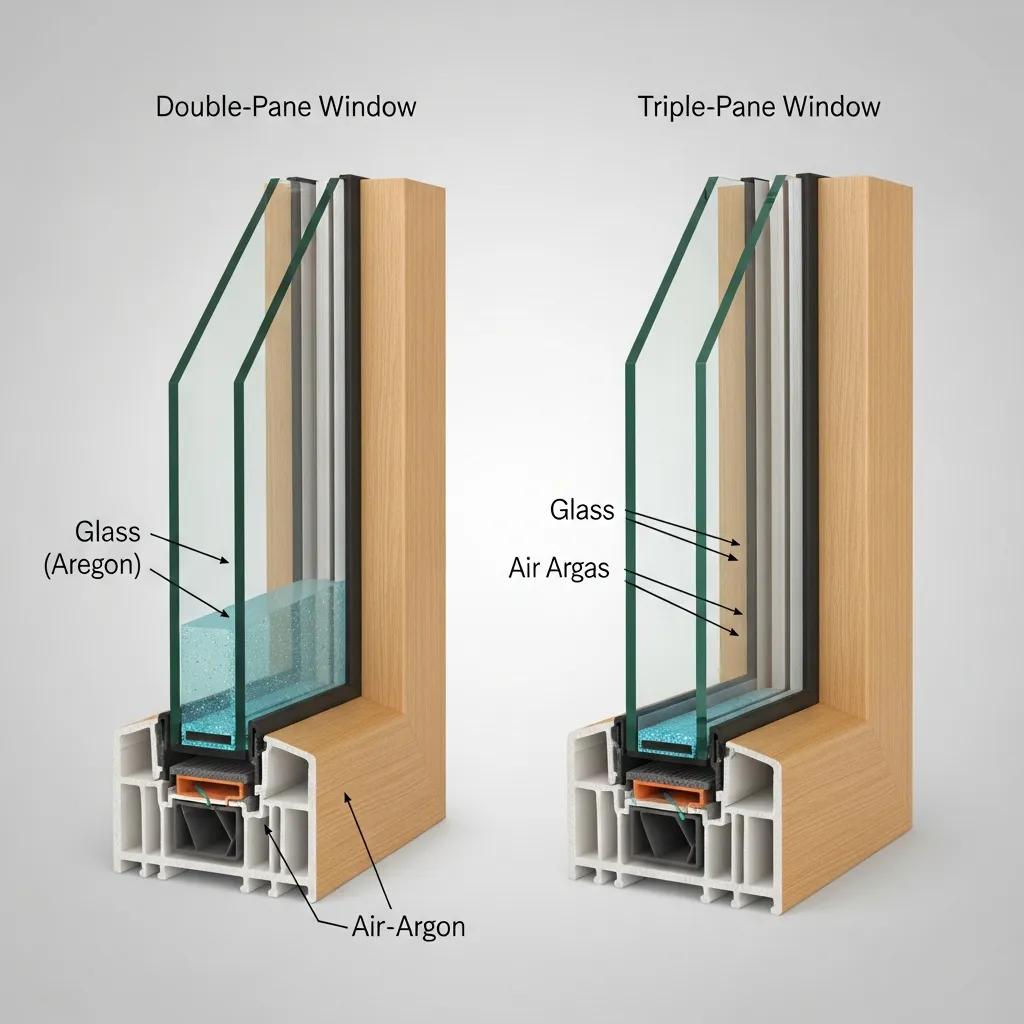
Double‑pane and triple‑pane windows differ in insulation, price, and ideal applications. Triple‑pane generally gets lower U‑factors but costs more. Double‑pane units use two glass lites separated by a spacer and often filled with argon; they offer a big improvement over single‑pane glass for insulation and condensation control. Triple‑pane adds a third lite and commonly uses krypton or optimized argon fills to push U‑factors lower and reduce noise—handy for very cold climates or noisy sites. The right choice depends on the incremental U‑factor gain versus the upfront cost and whether your home’s envelope and heating system can realize the extra savings. For many suburban Chicago homes, a well‑specified double‑pane window with high‑performance Low‑E and argon delivers the best value.
Triple‑Pane Windows: Enhancing Energy Savings in Residential Buildings
Windows are a key source of heat loss and air leakage in homes and represent a meaningful opportunity for energy savings. High‑performance glazing—like triple glazing—made up a small fraction of U.S. window sales (under 2% in 2016) because it often requires redesign of sash and frame. One lower‑cost strategy is replacing typical glazing with thin‑glass triple‑pane units that fit existing frames. Analysis of NFRC product data shows thin triple glazing can significantly improve thermal metrics: estimated space‑heating energy savings are about 16% in heating‑dominated climates (for example, Minneapolis), 12% in mixed climates (Washington, D.C.), and 7% in cooling‑dominated climates (Houston).
Different constructions deliver different energy and comfort outcomes. The table below compares common double‑ and triple‑pane options so you can see typical ranges and tradeoffs.
| Window Type | Typical U‑Factor Range | SHGC Range | Noise Reduction / Notes |
|---|---|---|---|
| Double‑pane (argon) | 0.28–0.40 | 0.20–0.60 | Good insulation; strong value for many retrofits |
| Triple‑pane (krypton or optimized argon) | 0.18–0.30 | 0.18–0.55 | Lower U‑factor and better sound control; higher cost |
| Double‑pane with warm‑edge spacer | 0.26–0.36 | 0.20–0.60 | Less edge heat loss; improves whole‑unit U‑factor |
Triple‑pane units can improve insulation and comfort but come with a price premium. Match glazing upgrades to your home’s envelope and expected payback to choose what’s cost‑effective.
What Are the Energy Efficiency Benefits of Double Pane Windows?
Double‑pane windows use an insulating gas layer between two glass lites to slow heat flow—reducing winter heat loss and summer heat gain. Argon‑filled double‑pane units with Low‑E coatings often cut energy transfer roughly in half compared with single‑pane glass, improving comfort and reducing interior condensation. Because they balance upfront cost and performance, a well‑specified double‑pane package with a warm‑edge spacer, argon fill, and the right Low‑E is a practical baseline for many suburban replacements, including most Chicago homes.
Are Triple Pane Windows Worth the Extra Cost for Your Home?
Triple‑pane windows deliver lower U‑factors and better acoustic performance, but the extra energy savings depend on climate, orientation, and your insulation levels. In very cold microclimates, poorly insulated homes, or properties exposed to heavy traffic noise, triple‑pane glazing can shorten payback through reduced heating bills and improved comfort. Otherwise, the higher upfront cost can take longer to recover. Triple glazing also lowers condensation risk and can protect interior finishes during extreme temperature swings—benefits some homeowners value for long‑term durability. Evaluate your whole‑house performance and modeled savings to see whether the triple‑pane premium makes sense for you.
Which Window Frame Materials Offer the Best Insulation and Durability?
Frame material affects thermal bridging, durability, maintenance, and lifecycle cost—so frames are as important as glazing. Common choices include vinyl, fiberglass, wood, and aluminum (often clad). Vinyl is affordable and thermally efficient for many applications. Fiberglass offers strong dimensional stability and long‑term thermal performance near that of wood. Wood provides natural insulation and a premium look but needs maintenance or cladding for durability. Pick the material that matches your priorities—initial cost, upkeep, thermal bridging, and appearance—because frame choice can change whole‑unit U‑factor significantly even with the same glass.
| Frame Material | Thermal Performance | Durability / Maintenance | Typical Cost Range |
|---|---|---|---|
| Vinyl | Medium–High | Low maintenance; stable | Low–Medium |
| Fiberglass | High | Very durable; low maintenance | Medium–High |
| Wood (clad options) | High | Requires upkeep unless clad | Medium–High |
| Aluminum (with thermal break) | Low–Medium | Durable; best with thermal break | Medium |
This table makes clear: fiberglass and wood tend to deliver the best thermal performance, while vinyl is a cost‑effective choice. Balance looks, upkeep, and your energy goals when choosing frames.
How Do Vinyl and Fiberglass Frames Compare for Energy Efficiency?
Vinyl frames are extruded PVC with hollow chambers that trap air, giving good basic insulation and low maintenance at an attractive price. Fiberglass frames expand and contract more like glass, which improves long‑term fit and thermal performance; they’re stronger structurally, let manufacturers use slimmer profiles, and hold tolerances over time. For large openings or homes where long‑term consistency matters, fiberglass often outperforms vinyl on value. For standard replacement projects, vinyl remains a solid, budget‑friendly option. Compare whole‑unit U‑factors and lifecycle costs—not just sticker price—when choosing.
What Are the Advantages of Wood Frames for Energy‑Efficient Windows?
Wood frames offer naturally good insulation and a classic look that suits historic and higher‑end homes. Clad‑wood combines a durable exterior (metal or vinyl) with a wood interior to cut maintenance while keeping the interior appearance and thermal benefits. Wood needs periodic painting or sealing to avoid moisture issues, but when specified and maintained correctly it provides lasting comfort and can raise perceived value in restoration projects. For Chicago‑area homes that want both energy performance and traditional finishes, clad‑wood is often the best compromise between insulation and upkeep.
What Are the Benefits of Low‑E Glass Technology for Energy Efficiency?

Low‑Emissivity (Low‑E) coatings are ultrathin metallic layers on glass that reflect long‑wave infrared heat while letting visible light pass. They reduce winter heat loss and limit unwanted summer solar gain. Different Low‑E types change SHGC and VT—some maximize solar control for west‑facing glass, others preserve solar gain for south‑facing exposures. Low‑E also blocks a large share of UV light, helping prevent fading. Choosing the right Low‑E is an orientation‑driven decision that ties to your U‑factor goals; the table below outlines common Low‑E types and recommended orientations.
| Low‑E Type / Coating | Visible Transmittance (VT) | Heat Reflection / UV Block % | Recommended Orientation |
|---|---|---|---|
| Passive‑gain Low‑E (hard coat) | 0.60–0.80 | Moderate reflection; UV block ~70% | South‑facing in cold climates |
| Solar‑control Low‑E (soft coat) | 0.40–0.70 | High reflection; UV block ~85–95% | West / west‑south exposures to limit summer gain |
| Low‑E for insulated glazing | 0.45–0.75 | Optimized for U‑factor reduction | North‑facing or balanced orientations |
Matching Low‑E type to orientation helps you keep daylight while optimizing seasonal comfort and energy performance.
How Does Low‑Emissivity Coating Reduce Heat Transfer and UV Rays?
Low‑E coatings cut radiative heat transfer by reflecting interior long‑wave infrared heat back into the house and by reducing solar infrared into the home. They lower a window’s effective U‑factor and help control solar gains. Coatings are applied on the glass surface or between panes; soft‑coat Low‑E usually gives stronger solar control and is used in insulated units, while hard‑coat Low‑E is durable for single‑pane or storm‑glass situations. Low‑E typically blocks over 70% of UV light, which protects fabrics and finishes without drastically reducing visible daylight. Choosing the right formulation by orientation preserves passive solar benefits and limits cooling loads in summer.
What Role Do Argon and Krypton Gas Fills Play in Window Insulation?
Inert gas fills such as argon and krypton live between glass panes to cut convective and conductive heat transfer. Argon is common and provides notable U‑factor improvement at a modest price—ideal for most double‑pane gaps. Krypton has lower thermal conductivity and is used where gap widths are narrow or in high‑performance triple‑pane units where the added cost is justified. The choice depends on gap width, desired U‑factor, and budget: argon is usually the cost‑effective standard; krypton is reserved for premium packages. Pair the right gas fill with Low‑E coatings and frame choices to reach your whole‑unit performance target.
How Should You Choose Energy‑Efficient Windows for Your Climate and Home?
Pick windows by matching orientation priorities, your home’s envelope quality, and style and ventilation needs. In the Chicago suburbs, prioritize low whole‑unit U‑factors on north and east elevations to reduce winter heat loss, set moderate SHGC on south faces if you use shading or thermal mass, and use stronger solar control for west exposures. Think about operability and egress rules: casement windows generally seal tighter than double‑hung units, while double‑hung windows offer flexible ventilation. Use the checklist below to guide selection and to pair glazing, frame, and installation choices for the best results.
- Set performance targets: Define whole‑unit U‑factor and SHGC targets by orientation and envelope condition.
- Match glazing to orientation: Pick Low‑E type and gas fill appropriate for south/west/north exposures.
- Pick frame material by priorities: Balance cost, maintenance, and thermal bridging for each elevation.
- Verify NFRC labels: Compare whole‑unit numbers—not just center‑of‑glass specs.
- Plan for professional installation: Include installation quality and warranty in the total cost.
We at Window Concepts help local homeowners by recommending climate‑specific window packages and handling installation—matching casement or insulated double‑hung units, suitable Low‑E coatings, and gas‑fill choices to Chicago‑area needs. We also review flexible financing, including promotional 0% offers for qualified buyers, and provide free consultations and custom quotes to align product selection with budget and performance goals. Working with a local installer helps ensure the chosen glazing, frame, and orientation perform as modeled after installation.
What Window Styles Are Best Suited for Chicago’s Weather?
Some window styles combine airtight sealing and operability better for cold, windy, and changeable Chicago weather. Casement and awning windows compress their seals when closed, creating an airtight barrier that minimizes air leakage and helps maintain rated U‑factor—useful during harsh winters. Properly sealed sliding units can perform well, and modern double‑hung windows work if they include upgraded sash seals and reinforced frames; they offer flexible ventilation but may need careful specification to match casement airtightness. Weigh airtightness, ventilation needs, and curb appeal when choosing styles for each side of your home.
How Does Window Orientation Affect Energy Performance?
Orientation determines whether you emphasize U‑factor or SHGC. North‑facing glass should favor low U‑factor to limit heat loss; south‑facing glazing can accept higher SHGC with shading to capture winter sun. East and west exposures typically need the most solar control—lower SHGC and, for west‑facing glass, external shading—to avoid uncomfortable afternoon heat in summer. Orientation also guides daylighting and glare control: higher VT is useful on north facades for diffuse daylight, while controlled VT and lower SHGC help on western facades. Mapping orientation to glazing and frame choices gives the best seasonal balance between heating savings and cooling avoidance.
Why Is Professional Installation and Financing Important for Energy‑Efficient Windows?
Correct installation protects a window’s rated performance. Poor fit, missed flashing, or inadequate sealing can erase manufacturer U‑factor and Air Leakage gains. Proper installation—accurate rough‑opening sizing, correct shimming, continuous air and water control layers, integrated flashing, and verified sealing—stops thermal bypass and moisture problems that hurt comfort and can damage the envelope. Financing and incentives also influence whether you can afford higher‑performance packages without straining cash flow; smart financing shortens payback for energy upgrades.
How Does Expert Installation Maximize Energy Savings?
Expert installation matters because even the best windows will underperform if air or moisture can bypass them. Professional crews ensure proper fit and alignment, install continuous exterior flashing and interior air barriers where required, and seal and insulate the perimeter correctly to prevent thermal bypass. Installers can also run diagnostic checks—blower‑door tests or thermal imaging—to confirm airtightness improvements and catch issues early. Quality installation protects warranties and preserves projected energy savings for the life of your windows.
At Window Concepts, we address homeowner concerns by combining proven installation practices with durable materials and performance‑focused products. We emphasize airtight frames, advanced glass technology, and correct integration with your wall assembly to secure long‑term performance. Our local team offers free consultations and custom quotes, and we outline financing options—sometimes including promotional 0% financing for 18 months for qualified buyers—to make upgrades accessible while protecting long‑term ROI.
What Financing Options Make Energy‑Efficient Windows Affordable?
Homeowners commonly use several financing tools—promotional 0% offers, home improvement loans, utility rebates, and tax credits—to spread costs and speed payback through energy savings.
Promotional 0% financing for a defined term (for example, an 18‑month offer for qualifying buyers) can let you choose higher‑performance packages without immediate interest. Longer‑term loans provide predictable payments that can align with monthly energy savings.
Before committing to financing, estimate your expected monthly energy savings and compare that to proposed payments to ensure positive cash flow. Pair financing with local incentives or utility rebates when possible to shorten payback and improve project economics.
When you’re ready to examine products, payments, and installation timelines, Window Concepts offers tailored financing guidance, explains available promotional terms (including 0% for 18 months where qualified), and provides free, no‑obligation quotes so you can compare monthly payments against expected savings. Our local, family‑run approach keeps recommendations grounded in Chicago‑suburban conditions and homeowner budgets.
- Compare financing structures: Match monthly payments to projected energy savings.
- Check promotional qualifications: Confirm eligibility for 0% deals and review documented terms.
- Factor in incentives: Look for rebates and tax credits that reduce net project cost.
These steps help homeowners choose a financing path that makes an energy‑efficient window project achievable.
Window Concepts specializes in energy‑efficient window sales and installation for homeowners across the Chicago suburbs. We provide in‑person evaluations, advanced glazing and airtight‑frame options, flexible financing (including promotional 0% offers for qualified buyers), and free custom quotes. For a practical next step, schedule a free consultation with a local specialist who will clarify NFRC/ENERGY STAR labels for your elevations, set tailored U‑factor and SHGC targets, and present transparent financing options so you can move ahead with confidence.
Frequently Asked Questions
What factors should I consider when choosing window styles for energy efficiency?
Think about airtightness, operability, and your local climate. Casement and awning windows usually seal tighter than other styles, which is useful in cold, windy weather. Also consider how each style fits your home’s architecture and ventilation needs. Balancing looks and performance will give you the best long‑term comfort and energy savings.
How can I determine the right U‑factor and SHGC for my home?
Start with your climate, window orientation, and current insulation levels. In colder areas aim for lower U‑factors to reduce heat loss; adjust SHGC by orientation—higher for south exposures to capture winter sun, lower for west exposures to avoid summer overheating. A local expert can model your elevations and give tailored targets based on your house and goals.
What maintenance is required for energy‑efficient windows?
Maintenance depends on frame material. Vinyl is low‑maintenance; fiberglass is durable and easy to care for. Wood needs periodic painting or sealing unless it’s clad. Inspect seals and weatherstripping, keep glass clean for good daylighting, and make sure drainage tracks are clear. Simple upkeep preserves efficiency and extends window life.
Are there any tax credits or rebates available for energy‑efficient window upgrades?
Many homeowners qualify for rebates or tax credits, but programs vary by state and utility. Check local energy offices, utility programs, and federal incentives to see what applies. Combining financing with rebates and credits can significantly reduce your net cost.
How do I ensure proper installation of energy‑efficient windows?
Hire an installer experienced with energy‑efficient products who follows best practices: accurate sizing, proper flashing, continuous air and water control, and verified sealing. Ask for references and reviews, and consider installers who offer diagnostics like blower‑door testing. A correct installation maintains the window’s rated performance.
What is the expected lifespan of energy‑efficient windows?
With proper materials and maintenance, energy‑efficient windows commonly last 20–40 years. Vinyl and fiberglass often require less upkeep than wood. Choosing quality products and professional installation helps maximize lifespan and return on investment.
Can energy‑efficient windows help reduce noise pollution in my home?
Yes. Double and triple‑pane windows with insulating gas fills (argon, krypton) and the right glass configurations can significantly reduce outside noise. This is especially useful for homes near busy roads or airports. Look for products with higher sound‑isolation ratings if noise is a priority.
Conclusion
Upgrading to energy‑efficient windows can cut heating and cooling costs, improve comfort, and protect interior finishes. Understanding metrics like U‑factor and SHGC helps you choose the right products for your climate and orientation. For personalized advice and professional installation, reach out to Window Concepts for a free consultation. Take the next step toward a more comfortable, energy‑efficient home today.